· BarossaRoofWorks · Roof Repairs · 8 min read
Why Adelaide Roofs Leak in Summer: The Hidden Cause Most Roofers Miss
Your roof doesn't leak in winter but mysteriously drips in summer? Here's why Adelaide's extreme summer heat causes leaks that have nothing to do with rain.
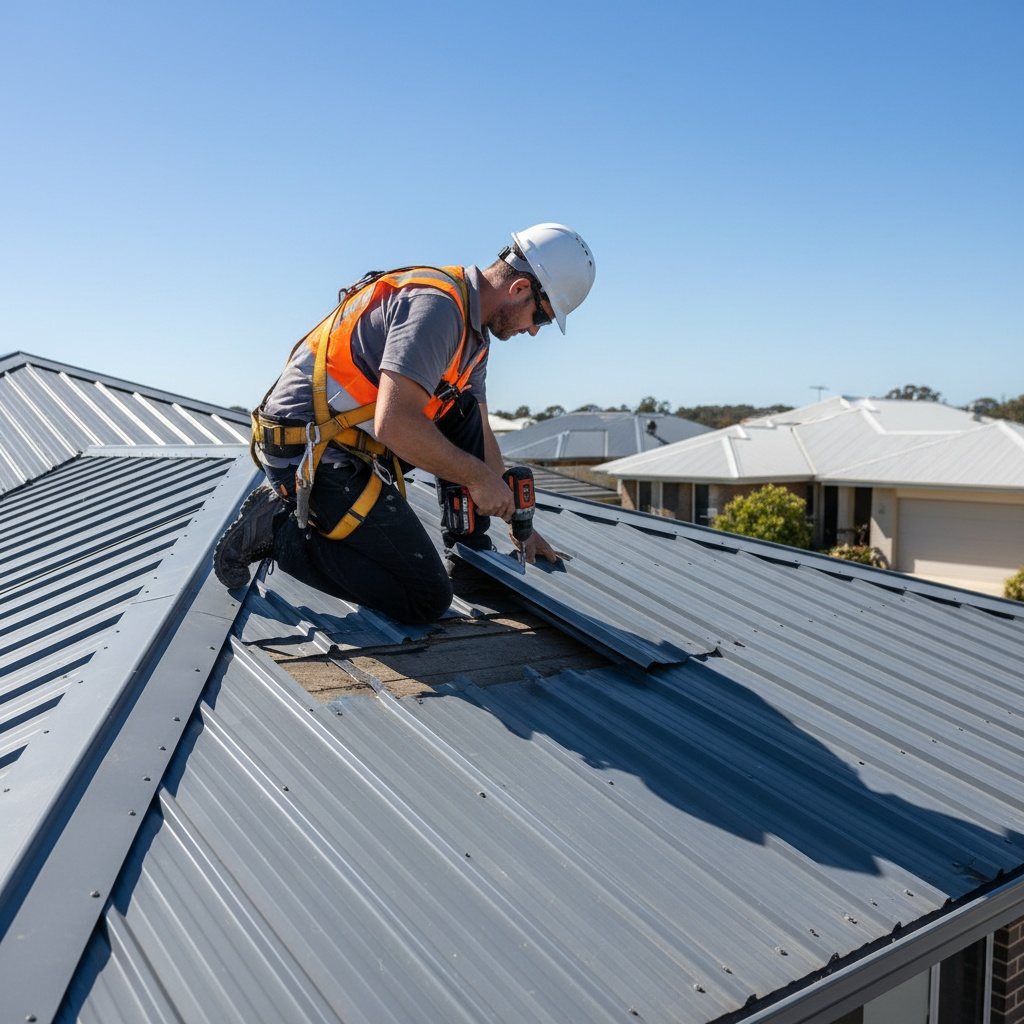
Here’s a scenario we see every January: An Adelaide homeowner calls about water dripping from their ceiling. It hasn’t rained in weeks. They’ve checked the plumbing. Everything seems fine. Yet water keeps appearing.
This isn’t a mystery. It’s condensation from inadequate roof ventilation combined with Adelaide’s extreme summer heat cycles.
Adelaide routinely sees 40°C+ days followed by 15°C nights - a 25-degree swing that creates perfect conditions for roof problems that most homeowners (and many roofers) don’t understand.
The Summer Roof Leak Phenomenon
What looks like a leak is often condensation. Here’s the mechanism:
During Adelaide’s summer days, your roof space can exceed 60°C. Metal roofing surfaces can reach 70-80°C in direct sun. This super-heated air holds significant moisture. As evening comes and temperatures drop rapidly, that moisture has to go somewhere.
If your roof ventilation is inadequate, the moisture condenses on the underside of your roofing material, on metal framework, and on the ceiling below. It then drips - creating what appears to be a roof leak.
Why Adelaide’s Climate Makes This Worse
Adelaide has a specific climate pattern that amplifies this problem:
Temperature extremes: Our Mediterranean climate means hot, dry summers with dramatic day-night temperature swings. The January 2024 heatwave saw days above 44°C followed by nights around 18°C - a 26-degree differential.
Low humidity: Counterintuitively, our dry summers make condensation worse. When humid summer days occur (often before a cool change), the moisture differential is extreme.
Rapid cool changes: Adelaide’s famous “cool changes” can drop temperatures 15 degrees in an hour. This rapid cooling causes sudden condensation.
Geographic variation:
- Barossa Valley homes experience even more extreme temperature swings due to inland location
- Adelaide Hills properties see cooler nights, increasing condensation risk
- Coastal suburbs have more moderate swings but higher humidity events
Thermal Expansion Damage: The Other Summer Threat
Beyond condensation, Adelaide summers cause physical damage through thermal expansion and contraction.
How Thermal Cycling Damages Roofs
Metal roofing expands when heated and contracts when cooled. A 6-metre Colorbond sheet can expand by 10-15mm on a 40°C day. Over thousands of cycles, this causes:
Fastener failure: Screw holes elongate as the sheet moves. Eventually, the seal around fasteners fails, creating leak points.
Flashing separation: Step flashing and apron flashing around chimneys, walls, and skylights can work loose as the metal moves daily.
Ridge cap movement: Ridge capping expands and contracts at different rates to the main roof sheets, stressing the fixings.
Valley problems: Valley flashings receive concentrated thermal stress and often fail before the main roof surface.
Signs of Thermal Expansion Damage
Look for these indicators that summer heat cycling has damaged your roof:
- Visible fastener lift: Screws standing proud of the surface
- Flashing gaps: Daylight visible where flashings meet walls
- Ridge cap movement: Gaps appearing under ridge caps
- Clicking or popping sounds: Roof making noise as it heats and cools
- Rust around fasteners: Water entry starting corrosion
Why Standard Leak Detection Fails
Many homeowners call a plumber first (understandable) and then a roofer. The roofer inspects on a mild day, finds no obvious penetrations or damage, and declares the roof sound.
Then the next heatwave comes, and the dripping returns.
The problem: Traditional leak detection looks for holes, cracks, and obvious damage. Condensation and thermal damage don’t present that way. You need someone who understands Adelaide’s climate effects on roofing systems.
Proper Summer Leak Diagnosis
When we assess a summer leak in Adelaide, we check:
- Roof space temperature - Is it exceeding 55-60°C in summer?
- Ventilation adequacy - Is there sufficient air exchange to remove moisture?
- Insulation condition - Is insulation wet (indicating ongoing condensation)?
- Sarking condition - Is the reflective sarking intact or degraded?
- Fastener condition - Are roof fasteners showing wear from thermal cycling?
- Flashing integrity - Are flashings still properly sealed after expansion cycles?
The Ventilation Solution
Adequate roof ventilation is non-negotiable in Adelaide’s climate.
Australian standards specify minimum roof ventilation, but many Adelaide homes (especially those built in the 1970s-1990s) don’t meet current requirements. Homes in the Barossa Valley, Adelaide Hills, and northern suburbs commonly have inadequate ventilation.
Types of Roof Ventilation
Passive ventilation:
- Ridge vents: Allow hot air to escape at the highest point
- Soffit vents: Allow cool air entry at eaves
- Gable vents: Cross-ventilation in gable roof designs
Active ventilation:
- Whirlybirds: Wind-powered extractors
- Solar-powered vents: Extract hot air using solar energy
- Electric roof fans: Thermostatically controlled extraction
Ventilation Requirements for Adelaide
For our climate, we recommend:
| Roof Area | Minimum Vent Area | Recommended Vent Area |
|---|---|---|
| 100m² | 500cm² | 1,000cm² |
| 150m² | 750cm² | 1,500cm² |
| 200m² | 1,000cm² | 2,000cm² |
Important: Ventilation must be balanced - roughly equal intake (soffit) and exhaust (ridge/whirlybird) area.
Case Study: Nuriootpa Summer Condensation
The situation: A 1985-built home in Nuriootpa experiencing summer ceiling drips for three years. Two previous roofers found “no leak” after inspecting in autumn.
Our assessment:
- Roof space temperature recorded at 62°C on a 38°C day
- Only two small gable vents (totally inadequate for the roof area)
- Insulation batts were damp throughout
- Condensation visible on roofing iron underside during morning inspection
The solution:
- Installed 4 x solar-powered roof vents
- Added continuous soffit venting (previously blocked)
- Replaced water-damaged insulation
- Cost: $3,200
The result: No summer dripping for the subsequent two summers. Roof space temperatures now peak at 45°C - a significant improvement.
“After years of putting towels under drips every summer, we finally have a dry ceiling. The previous roofers kept saying there was no leak - because there wasn’t. It was condensation all along.” - Stuart & Helen K., Nuriootpa
Thermal Damage Repairs
If your roof has suffered thermal expansion damage, repairs typically include:
Fastener Replacement
Worn or elongated screw holes need attention:
- Remove old fasteners
- Seal old holes with appropriate sealant
- Install new fasteners in fresh locations
- Use neoprene-sealed screws rated for thermal movement
Cost: $800-$2,500 depending on roof size and damage extent
Flashing Resealing
Flashings that have separated due to thermal movement:
- Clean all surfaces to bare metal
- Apply flexible sealant (not rigid silicone)
- Use expansion-tolerant fixings where possible
- Consider replacing if severely damaged
Cost: $400-$1,500 depending on locations affected
Ridge Cap Restoration
Ridge capping often shows thermal damage first:
- Re-bed ridge caps with flexible mortar (tile roofs)
- Re-point with flexible pointing compound
- Re-seal metal ridge caps with appropriate sealants
- Replace damaged sections as needed
Cost: $600-$2,000 depending on roof size
Prevention: Protecting Your Roof from Summer Damage
New Roof Considerations
If you’re building or replacing a roof in Adelaide:
Colour choice matters: Light colours (Surfmist, Paperbark, Classic Cream) reflect more heat, reducing thermal stress and interior temperatures. Dark colours absorb heat, increasing thermal cycling damage.
Quality fasteners: Use screws rated for thermal cycling, with long-life neoprene seals.
Adequate ventilation: Exceed minimum standards - Adelaide needs more than the national minimum.
Reflective sarking: Install reflective insulation/sarking to reduce heat transfer into the roof space.
Existing Roof Protection
For current homeowners:
- Add ventilation - Most Adelaide homes need more
- Inspect annually - Before summer is ideal (October-November)
- Check flashings - Look for separation or cracked sealants
- Monitor fasteners - Watch for lifted screws
- Consider roof coating - Reflective coatings reduce thermal stress
When to Call a Professional
Contact us if you experience:
- Ceiling drips during or after hot days (not during rain)
- Roof space temperatures exceeding 55°C
- Musty smells in summer (indicating condensation and mould)
- Visible condensation in roof space
- Clicking/popping roof sounds during temperature changes
- Flashing gaps appearing seasonally
Get Your Roof Assessed for Summer Performance
Many Adelaide homeowners have been told their roof is “fine” when it’s actually suffering from preventable summer damage. We provide assessments specifically looking at thermal performance and ventilation adequacy.
Our summer performance assessment includes:
- Roof space temperature monitoring
- Ventilation adequacy evaluation
- Thermal damage inspection
- Condensation risk assessment
- Recommendations for improvement
Contact us:
- Phone: 08 7093 7290
- Contact form
We service the Barossa Valley, Adelaide Hills, northern Adelaide, and surrounding areas - all regions where summer heat causes significant roof stress.
Frequently Asked Questions
Why does my roof only leak on hot days?
Because it’s not actually leaking - it’s condensing. Hot air in your roof space holds moisture. When evening cooling occurs, that moisture condenses and drips. The solution is improved ventilation, not leak repair.
Can poor ventilation damage my roof permanently?
Yes. Prolonged condensation causes rust on metal components, rot in timber, and mould growth. It also reduces insulation effectiveness (wet insulation has almost no R-value) and can damage ceilings.
How much does it cost to add roof ventilation?
Basic whirlybird installation: $300-$500 per unit. Solar-powered vents: $400-$700 per unit. Complete ventilation system upgrade (soffit vents + ridge/roof vents): $1,500-$4,000 depending on roof size and complexity.
Will a lighter-coloured roof really make a difference?
Significantly. Light-coloured Colorbond roofs can be 20-30°C cooler than dark colours in summer sun. This reduces thermal stress on the roof, lowers cooling costs, and decreases condensation risk. If you’re re-roofing, colour choice is an important decision.
Do whirlybirds actually work?
Yes, when properly sized and installed with adequate intake venting. A single whirlybird on a large roof won’t achieve much. Properly balanced systems with soffit vents and multiple roof vents are effective. Solar-powered vents work even without wind and are often more effective.
My roof was inspected and declared fine - but it still drips in summer. What now?
Request a summer-specific assessment from someone who understands Adelaide’s climate effects. Standard leak inspections don’t look for thermal damage or ventilation problems. Mention that the issue is heat-related, not rain-related.
Related Resources
- Roof Repair Services - Expert diagnosis of all leak types
- Mount Barker Roofing - Adelaide Hills specialists for condensation issues
- Tanunda Roofing - Barossa Valley thermal damage repairs
- Maintenance Programs - Prevent summer damage with regular inspections