· BarossaRoofWorks · Roof Repairs · 8 min read
Storm Damage Roof Repair: Adelaide Insurance Claims Guide 2025
Hail hit your roof? Learn how to handle storm damage repairs, navigate insurance claims, and protect your Adelaide home from further damage.
Adelaide experiences severe storms, particularly in the Adelaide Hills where hail and high winds cause significant roof damage each year. If your roof has been damaged by a storm, acting quickly and correctly can save thousands of dollars and prevent further damage to your home.
Here’s your complete guide to handling storm damage roof repairs and insurance claims.
Immediate Steps After Storm Damage
When a storm damages your roof, follow these steps in order:
1. Ensure Safety First
- Don’t climb on the roof - It may be structurally compromised
- Stay away from fallen power lines - Call SA Power Networks (13 13 66)
- Watch for water entry - Move valuables away from leak areas
- Document visible damage - Photos from ground level
2. Prevent Further Damage
Your insurance policy requires you to take reasonable steps to prevent further damage. This might include:
- Placing buckets under leaks - Protect flooring and belongings
- Covering damaged areas - If safely accessible
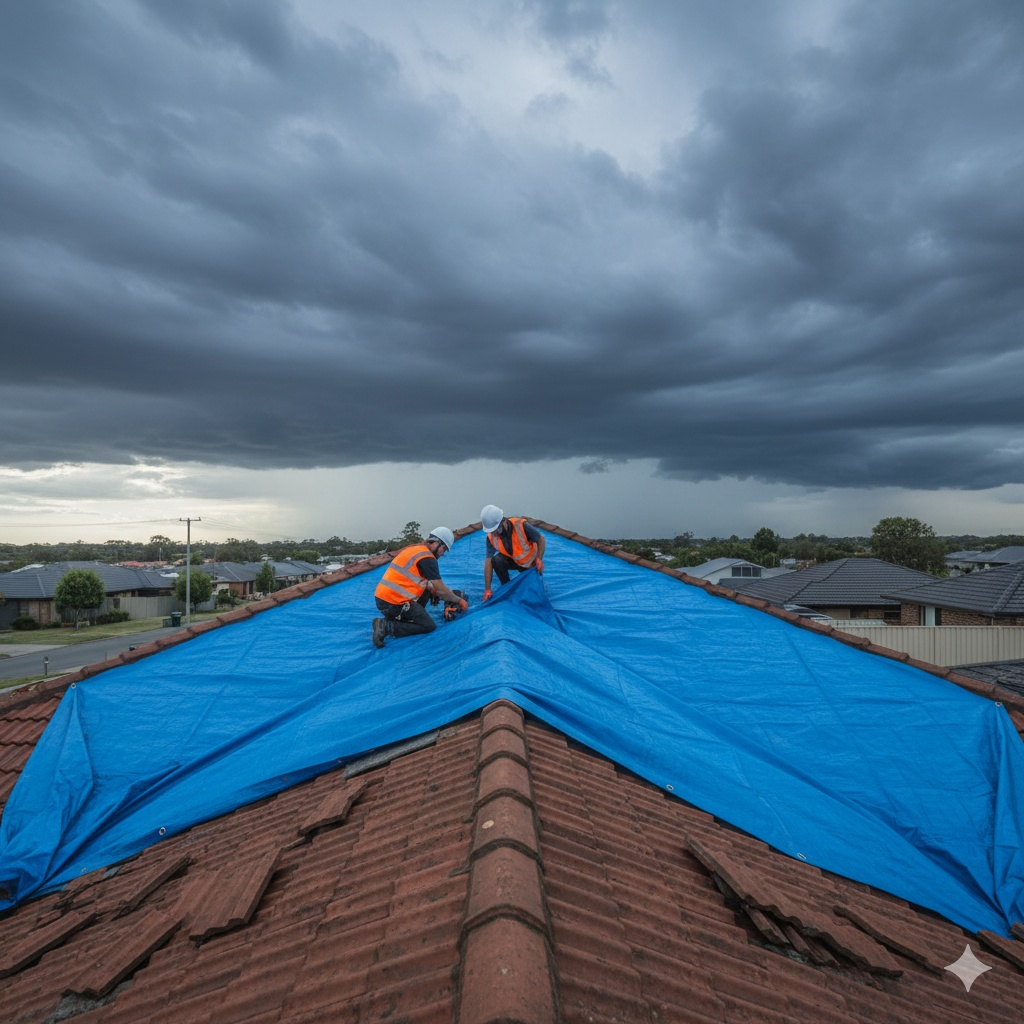
- Calling for emergency tarping - Professional temporary protection
Important: Keep receipts for any emergency measures - these are typically claimable.
3. Contact Your Insurance Company
Call your insurer as soon as possible to:
- Report the damage
- Get a claim number
- Understand your policy coverage
- Ask about approved repairers vs choice of contractor
4. Document Everything
Thorough documentation strengthens your claim:
- Photographs - Damage from multiple angles
- Video - Walk around showing extent of damage
- Written notes - Date, time, weather conditions
- Receipts - Emergency repairs, temporary accommodation if needed
Types of Storm Damage to Adelaide Roofs
Hail Damage
The Adelaide Hills (Mount Barker, Nairne, Stirling) experiences frequent hail storms. Damage includes:
Tile Roofs:
- Cracked or broken tiles
- Chipped edges and corners
- Damaged ridge capping
- Broken pointing
Metal/Colorbond Roofs:
- Dents and dimpling
- Scratched surface coating
- Damaged flashings
- Gutter damage
Signs of Hail Damage:
- Visible cracks or breaks in tiles
- Circular dents in metal roofing
- Damaged downpipes showing dents
- Cracked skylights
Wind Damage
High winds affect roofs through:
- Lifted or displaced tiles/sheets
- Torn flashings around vents and edges
- Damaged ridge capping
- Fallen debris causing impact damage
- Fascia and gutter displacement
Water Damage (Secondary)
Often the most expensive damage is from water entry after the initial storm damage:
- Ceiling damage - Stains, sagging, collapse
- Wall damage - Water tracking down walls
- Insulation damage - Wet insulation loses effectiveness
- Electrical hazards - Water near wiring
- Mould growth - Develops within 24-48 hours
Understanding Your Insurance Coverage
What’s Typically Covered
Most home insurance policies cover sudden storm damage, including:
- Roof repairs or replacement due to storm
- Emergency tarping and temporary repairs
- Water damage to interior from roof breach
- Debris removal from your property
- Temporary accommodation if home is uninhabitable
What’s Typically NOT Covered
- Pre-existing damage - Wear and tear before the storm
- Gradual deterioration - Neglected maintenance issues
- Flood damage - Requires separate flood cover
- Landscaping - Limited or excluded
- Fencing - Often limited coverage
Policy Excess
You’ll pay an excess (typically $500-$1,500) before insurance pays. Some policies have specific storm/hail excess amounts.
Sum Insured Limits
Check your policy’s sum insured - if repair costs exceed this, you pay the difference.
The Insurance Claim Process
Step 1: Lodge Your Claim
Contact your insurer with:
- Policy number
- Date and time of storm
- Description of damage
- Your contact details
You’ll receive a claim number - keep this for all future contact.
Step 2: Assessment
Your insurer will either:
- Send an assessor - For significant claims
- Request quotes - For smaller claims
- Use their approved repairer - Some policies require this
Step 3: Getting Quotes
If you can choose your contractor, get 2-3 quotes including:
- Detailed scope of work
- Itemised pricing
- Timeframe for repairs
- Warranty information
Step 4: Approval and Repairs
Once approved:
- Confirm the scope matches the approval
- Schedule the work
- Keep communication records
- Document repairs with photos
Step 5: Payment
Payment typically goes directly to you or is split between you and the contractor. Ensure all work is completed before final sign-off.
How We Help With Insurance Claims
At BarossaRoofWorks, we handle storm damage claims regularly. Our process:
Free Damage Assessment
We inspect your roof and provide:
- Comprehensive damage report
- Photographic documentation
- Detailed scope of required repairs
- Written quote for insurance submission
Insurance Liaison
We work directly with your insurer:
- Provide documentation in their required format
- Answer technical questions from assessors
- Justify repair requirements if questioned
- Negotiate scope if initial assessment is insufficient
Quality Repairs
We complete approved repairs:
- Using quality materials
- With full warranties
- Documented with before/after photos
- Cleaned up and inspected
Case Study: Mount Barker Hail Storm
The situation: Severe hail storm damaged tile roof on 15-year-old home in Nairne. Over 80 tiles cracked or broken, ridge capping damaged, gutters dented.
Our approach:
- Emergency tarping within 4 hours of call
- Full damage assessment and documentation
- Detailed quote submitted to insurer
- Liaised with assessor who initially underestimated damage
- Full repair approved after our documentation review
The result:
- Complete tile replacement (120 tiles)
- Ridge capping re-bedded and re-pointed
- Gutters replaced
- Total claim: $12,400 (excess: $500)
- Homeowner cost: $500
“The storm was terrifying and seeing all those broken tiles was overwhelming. The BarossaRoofWorks team had our roof tarped the same day, then handled everything with the insurance company. They got the full repair approved when the assessor initially wanted to do a patch job. Couldn’t have managed without them.” - James & Rebecca H., Nairne
Common Insurance Claim Issues
Issue 1: “Pre-Existing Damage”
Insurers may claim damage existed before the storm.
Solution:
- Provide photos from before the storm (real estate listings, Google Street View)
- Get a professional assessment distinguishing storm damage from wear
- Challenge the decision with evidence if incorrect
Issue 2: Lowball Assessment
The insurer’s assessment may not cover proper repairs.
Solution:
- Get independent quotes from qualified roofers
- Provide detailed scope explaining why full repairs are needed
- Request reassessment with your contractor present
- Use your insurer’s internal dispute process if needed
Issue 3: “Repair Not Replace”
Insurers prefer repairs, but sometimes replacement is necessary.
Arguments for replacement:
- Matching materials unavailable
- Repair would leave roof compromised
- Multiple repairs cost more than replacement
- Building code requirements have changed
Issue 4: Delays
Storm events create claim backlogs.
Managing delays:
- Get emergency repairs done (claimable)
- Document ongoing damage from delays
- Follow up regularly in writing
- Consider using a loss assessor for large claims
Storm-Prone Areas in Adelaide
Some areas experience more storm damage due to topography:
Adelaide Hills (Highest Risk)
- Mount Barker - Elevated, hail-prone
- Stirling - Exposed to westerly storms
- Nairne - Hills weather pattern
- Hahndorf - Valley wind acceleration
- Lobethal - Elevated eastern hills
Northern Suburbs (Moderate-High Risk)
- Tea Tree Gully foothills - Hills weather influence
- Golden Grove - Storm corridors
- Salisbury - Flat terrain, wind exposure
Metro Adelaide (Moderate Risk)
- Coastal suburbs - Sea breeze front storms
- Inner suburbs - Urban heat island effects
Preventing Storm Damage
While you can’t prevent storms, you can minimise damage:
Regular Roof Maintenance
- Annual inspections - Catch issues before storms
- Secure loose tiles/sheets - Before storm season
- Clear gutters - Prevent water backup
- Trim overhanging branches - Reduce debris risk
Roof Upgrades
- Replace aging roofs proactively - Old roofs fail in storms
- Consider Colorbond - More wind-resistant than tiles
- Install roof tie-downs - For high wind areas
Insurance Review
- Check your coverage - Before storm season
- Document your roof condition - Annual photos
- Update sum insured - Match current rebuild costs
Emergency Roof Repairs
When to Call for Emergency Service
Call us immediately if:
- Water is entering your home
- Structural damage is visible
- Large sections of roofing are missing
- Dangerous materials are exposed
What Emergency Service Includes
- Same-day response (weather permitting)
- Professional tarping - Securely fitted
- Temporary repairs - Stop water entry
- Damage assessment - Full documentation
- Insurance guidance - Next steps advice
Emergency Tarping Costs
Emergency tarping typically costs $300-$800 depending on:
- Size of damaged area
- Accessibility
- Materials required
- After-hours callout
This is generally claimable on your insurance.
Get Help With Storm Damage
If your roof has been damaged by a storm, we’re here to help:
Emergency Response: Call 08 7093 7290 - 24/7 for urgent situations
Insurance Claims: We provide full documentation and liaison with your insurer
Coverage Areas: Adelaide Hills, Mount Barker, Barossa Valley, northern suburbs, and Adelaide metro
Free Assessment: We inspect damage and provide detailed quotes at no cost
Don’t let storm damage become a bigger problem. Contact us for fast, professional assistance.
Frequently Asked Questions
How quickly should I report storm damage to my insurer?
Report as soon as possible, ideally within 24-48 hours. Most policies require “prompt” notification. Don’t wait until you get quotes - lodge the claim first, then gather documentation.
Can I choose my own roofing contractor?
Most policies allow you to choose your contractor. Some have preferred supplier networks that may offer faster processing. Check your policy wording or ask your insurer.
What if the damage is worse than the assessor found?
If repairs reveal additional damage, document it immediately and contact your insurer. Most policies cover damage discovered during repairs if it’s clearly storm-related.
Will my premiums increase after a storm claim?
One storm damage claim typically doesn’t significantly increase premiums, as it’s considered “act of nature” rather than negligence. Multiple claims may affect future premiums.
How long do I have to complete repairs?
Most insurers expect repairs within a reasonable timeframe, typically 6-12 months. However, they understand delays due to contractor availability after major storms. Keep your insurer informed of progress.
What if I can’t afford the excess?
Some contractors offer payment plans. You might also check if your excess can be paid in instalments or consider whether the claim is worthwhile for smaller damage amounts.
Related Resources
- Mount Barker Roofing Services - Adelaide Hills storm damage specialists
- Tea Tree Gully Roofing Services - Northeast suburbs coverage
- Roof Repair vs Replacement Guide - When to repair vs replace after storm damage
- Tile Roof Maintenance Guide - Maintaining tile roofs to prevent storm damage